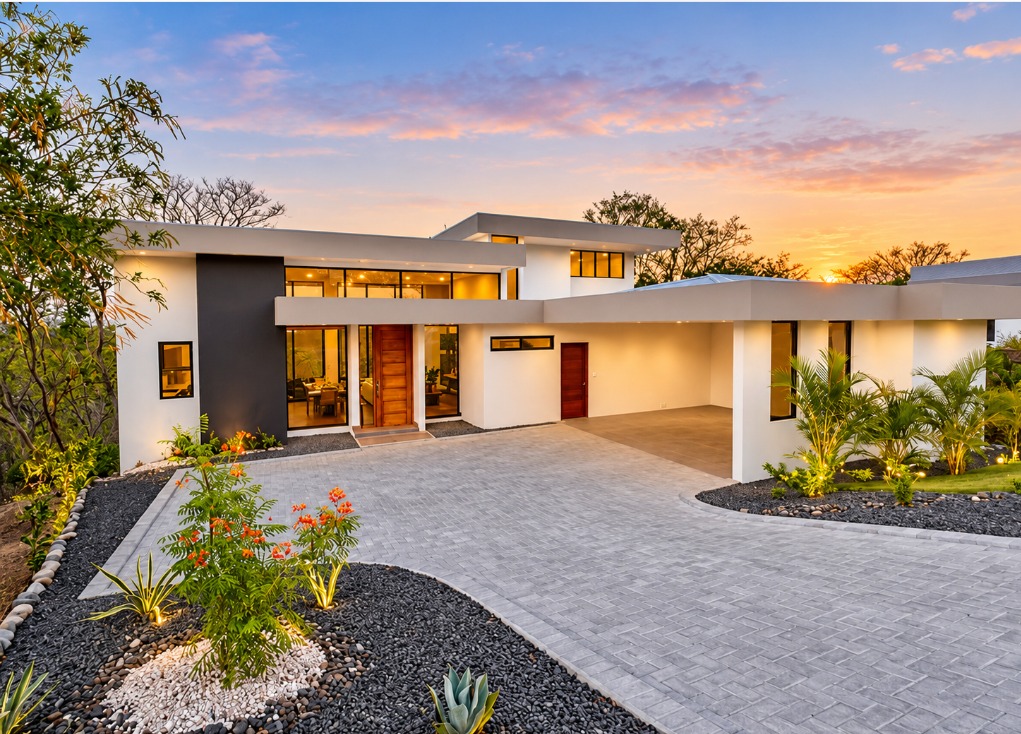
Thinking about buying a casa in Costa Rica in 2026? Whether you want a permanent home near Playas del Coco, a coastal retreat in Playa Hermosa or a property with rental potential around the Gulf of Papagayo, understanding the purchase process is essential before committing your money.
Buying a home in another country involves questions that may not arise during a domestic property purchase. You need to confirm legal ownership, understand closing costs, investigate water and electricity services and establish whether the property has the necessary building permissions.
The good news is that foreign nationals can generally purchase privately titled real estate in Costa Rica without residency. However, special rules apply to certain coastal properties, and a successful transaction depends on careful independent due diligence.
With more than 22 years of experience in the Playas del Coco area, Coldwell Banker Coast to Coast Properties helps international buyers explore homes, condominiums, land and investment properties throughout Costa Rica. This guide explains what to expect, including real property examples from the agency's current portfolio.
What Does Buying a Casa in Costa Rica Mean?
Casa is the Spanish word for house. In Costa Rica's property market, it is commonly used in listing names and descriptions for detached residences, villas and family homes.
Buyers searching for a casa may be looking for a full-time residence, retirement home, holiday property or accommodation with potential rental income. Each objective leads to different considerations about size, accessibility, location and running costs.
A full-time residence may need dependable access to healthcare, supermarkets and other services. A second home may place greater emphasis on ease of maintenance, security and proximity to the beach. A rental investment requires careful analysis of actual income, occupancy and operating expenses.
Start by exploring the agency's homes for sale across Costa Rica and comparing properties that match your intended use.
Where Should You Buy a Home in Costa Rica?
Costa Rica offers very different residential environments. Some buyers prefer established coastal towns, while others seek mountain properties, larger inland plots or managed residential communities.
For buyers interested in Guanacaste, the communities around Playas del Coco and the Papagayo Peninsula provide a useful starting point.
Playas del Coco
Playas del Coco is an established coastal town with supermarkets, restaurants, shops and residential neighbourhoods. It offers a mix of houses, condominiums and luxury residences, making it relevant to buyers with different budgets and requirements.
Its location also makes it convenient for accessing Daniel Oduber Quirós International Airport near Liberia, although journey times depend on traffic and the specific property.
Browse properties available in Playas del Coco to compare current asking prices and property types.

Playa Hermosa and Playa Ocotal
Playa Hermosa and Playa Ocotal offer alternatives for buyers who want coastal living near Playas del Coco while exploring quieter neighbourhoods, hillside communities and properties with ocean views.
Playa Hermosa in this part of Guanacaste should not be confused with the beaches of the same name near Santa Teresa or Jacó. Buyers should check the property's municipality and exact location when reviewing online listings.
Papagayo Peninsula
The Papagayo area attracts buyers interested in luxury residences, coastal settings and resort-oriented communities. Purchase prices and ownership expenses can be substantially different from those of more modest houses in Playas del Coco.
For a closer look at the lifestyle, read the agency's guide to living costs on the Papagayo Peninsula.
Real Costa Rica Homes for Sale in 2026
Actual listings provide a more useful indication of the market than broad national averages. The following examples demonstrate different price points within the Coldwell Banker Coast to Coast portfolio.
Casa Lago: Three-Bedroom Home for US$399,000
Casa Lago, listing ID 27236, is advertised for US$399,000. Located in Mediterraneo near Playas del Coco, the property offers three bedrooms, two bathrooms and a private swimming pool.
The listing describes approximately 139 m² of interior living space on a 325 m² plot. The single-level home includes Guanacaste wood details, a fitted kitchen and a private outdoor area.
According to the listing, the property does not have homeowners' association fees. For buyers seeking an independent home, this could be relevant when comparing recurring costs, although maintenance remains the owner's responsibility.
The Sunshine House: US$289,900
Another advertised option is The Sunshine House, listing ID 27232, in Playas del Coco, priced at US$289,900.
The agency's property inventory identifies a three-bedroom, two-bathroom home. This provides a second reference point for buyers comparing residential houses at different budgets.
Before choosing between properties, buyers should compare not only the asking price but also the location, construction condition, permitted use, insurance requirements and maintenance expenses.
Luxury Ocean-View Living
At the higher end of the market, the agency advertises Villa Altamar, a five-bedroom, five-bathroom ocean-view estate in Ladera del Mar, Playas del Coco, for US$2.6 million.
This illustrates how luxury homes occupy a different segment of the market from smaller independent houses. Buyers considering high-value properties should pay particular attention to security, landscaping, private pools, insurance and long-term maintenance.
All prices are advertised figures and may change. Check the live property inventory and confirm availability before making financial decisions.
Can Foreigners Own a House in Costa Rica?
Foreign buyers can generally acquire privately titled property in Costa Rica in their own names without holding permanent residency.
However, ownership arrangements differ depending on the property's legal classification. Three terms are particularly important.
| Property Category | What It Means | Buyer Consideration |
|---|---|---|
| Privately titled property | Registered ownership recorded in Costa Rica's National Registry | Verify title, boundaries and encumbrances |
| Coastal concession | Conditional rights of use within applicable maritime-zone land | Check eligibility, validity and approvals |
| Possession rights | Claims based on possession rather than ordinary registered ownership | Requires specialised legal investigation |
Costa Rica's Maritime Terrestrial Zone Law generally regulates land within 200 metres of the ordinary high-tide line, subject to exceptions. The first 50 metres generally form the public zone, while the next 150 metres form a restricted zone where concession rules may apply.
Foreign ownership restrictions are particularly important in concession areas. A Costa Rican company does not automatically remove those restrictions.
An independent Costa Rican lawyer should confirm the precise legal status of any property before you sign an unconditional agreement.

Step-by-Step Guide to Buying a Casa in Costa Rica
Step 1: Establish Your Requirements
Decide whether the property will be a permanent residence, second home or rental investment. Set a total budget that includes the purchase, closing expenses, immediate repairs and a contingency.
Step 2: Shortlist Suitable Properties
Compare properties according to the factors that matter most: location, bedrooms, accessibility, amenities, security, ownership structure and maintenance commitments.
A local estate agent can help organise viewings and identify property-specific questions. However, legal and technical assessments should be carried out independently.
Step 3: Make an Offer with Appropriate Conditions
Once a suitable home has been found, the buyer and seller may negotiate the price, deposit, completion arrangements and conditions for legal and physical investigations.
Deposit amounts vary. Any deposit should be handled under clearly documented arrangements, including the circumstances in which it can be returned.
Step 4: Complete Independent Due Diligence
Your lawyer should investigate the registered ownership, outstanding mortgages, easements, taxes and legal restrictions. The physical property should also be inspected to identify defects and confirm what is included in the sale.
Step 5: Complete the Purchase
For an ordinary titled-property transaction, a Costa Rican notary prepares the transfer deed and handles the necessary registration procedure. The parties should agree in writing when possession transfers and how keys, utilities and any furnishings will be handed over.
There is no single guaranteed completion period. Financing, documentation issues and unresolved legal or inspection findings may affect the timetable.
What Should You Check Before Buying a Costa Rica House?
A home should be assessed as both a legal asset and a physical building. These checks are especially important when purchasing remotely or viewing a property only during the dry season.
- Ownership: Verify the registered owner and any mortgages, liens or restrictions.
- Survey: Confirm that the cadastral plan matches the physical property boundaries.
- Building permissions: Check the approvals for existing structures and significant alterations.
- Water: Confirm a lawful and reliable supply for the intended use.
- Electricity: Investigate installation condition and service arrangements.
- Drainage: Assess rainwater management and any signs of past flooding.
- Roofing and structure: Commission appropriate independent inspections.
- Access: Verify public-road access or legally registered easements.
- Ongoing costs: Review insurance, property taxes, utilities and maintenance.
- Community rules: Check any applicable association fees and restrictions.
The agency's Costa Rica land-buying guide explains why water, access, permitted use and surveys can substantially affect a property's true value.
How Much Does It Cost to Buy a Casa in Costa Rica?
The asking price is only part of the total amount a buyer needs. A purchase may also involve transfer taxes, legal fees, notarial charges, registration expenses, surveys and inspections.
Costa Rica generally applies a 1.5% real estate transfer tax to applicable transfers. However, the tax base and other transaction costs must be confirmed by the professionals handling the purchase.
For example, a hypothetical US$350,000 home would generate US$5,250 in transfer tax if that purchase price were the applicable taxable value. The following table illustrates the costs a buyer should consider without assuming unverified fees.
| Cost Component | Amount or Basis |
|---|---|
| Example purchase price | US$350,000 |
| Illustrative transfer tax | US$5,250 at 1.5% |
| Legal and notarial services | Obtain a written quotation |
| Registration and administrative charges | Confirm applicable charges |
| Survey and inspections | Based on property requirements |
| Immediate repairs and moving expenses | Property-specific budget |
A deposit credited towards the purchase price should not be counted as an additional purchase cost. Buyers should obtain a complete written closing statement and clarify the agreed allocation of expenses before completion.

Should You Buy a House or a Condominium?
Detached houses and condominiums can offer very different ownership experiences. The best choice depends on how often you will use the property and how much maintenance you want to manage.
A detached home may offer more privacy, garden space and control over improvements. However, responsibility for the roof, exterior, security, garden and pool usually falls on the individual owner.
A condominium may include managed communal areas, shared security and maintenance services. In exchange, owners generally pay association fees and must comply with the development's governing rules.
Ask for condominium documents, financial statements and any planned special assessments. If you intend to rent the property to guests, confirm whether the applicable regulations and community rules allow the proposed activity.
Financing a Costa Rica Home as a Foreign Buyer
Some foreign buyers purchase homes using existing funds, while others investigate Costa Rican bank finance, lending secured against assets abroad or seller-financing arrangements.
Mortgage eligibility depends on residency status, income, credit history, lender policies and the property itself. The availability of borrowing should not be assumed, nor should a particular deposit percentage or interest rate be treated as standard for every applicant.
Buyers relying on finance should obtain lender-specific information before committing to an unconditional transaction. The purchase agreement should appropriately address any financing dependency.
Ongoing Costs of Owning a Casa in Guanacaste
Homeownership costs continue after the purchase. Ordinary municipal property tax is generally 0.25% of the relevant municipal property value, and other obligations can apply depending on the property.
Insurance, repairs, utility bills and the condition of exterior materials should also be considered. Guanacaste's coastal environment can expose homes to seasonal heavy rain, humidity and salt air.
Properties with private swimming pools or extensive landscaping may require regular servicing. Owners living overseas may also need a trusted person or property manager to supervise the residence during their absence.
Request actual utility bills, maintenance records and insurance quotations for the property being considered. These will provide a more credible ownership budget than relying on generic cost estimates.

Frequently Asked Questions
Can foreigners buy a casa in Costa Rica?
Yes. Foreign nationals can generally buy privately titled property in Costa Rica without residency. However, certain coastal concession areas have additional restrictions. An independent Costa Rican lawyer should verify the legal status of the property before purchase.
Do I need residency to purchase a home?
Residency is not generally required to acquire privately titled real estate. Nevertheless, property ownership does not automatically grant residency or permission to remain indefinitely. Buyers planning to relocate should investigate the relevant immigration requirements separately.
Can I get a mortgage in Costa Rica as a foreigner?
Some lenders may consider applications from foreign purchasers, but eligibility and terms depend on individual circumstances. A buyer should seek lender-specific confirmation of the deposit, interest rate, required documents and permitted property types before relying on finance.
How long does the property purchase process take?
The timetable varies according to documentation, financing, inspections, contract conditions and the title registration process. A straightforward purchase may proceed more quickly than a transaction involving outstanding legal matters or complex ownership arrangements. Ask your lawyer for a realistic property-specific timetable.
How much are closing costs?
Closing costs may include an applicable 1.5% transfer tax, legal and notarial fees, registry expenses and other professional services. Buyers should request a written estimate based on the actual transaction rather than assume a fixed total percentage.
Should I buy property personally or through a company?
Either structure may be appropriate depending on legal, tax and estate-planning considerations. A company can introduce additional administrative responsibilities and does not automatically eliminate taxes or coastal ownership restrictions. Seek independent legal and tax advice before deciding.
Can I rent out my Costa Rica house?
Rental use may be possible, but the property must comply with applicable legal requirements and any community rules. Buyers should investigate operating permissions, tax obligations and realistic rental income before relying on the property as an investment.
What is the most important check before buying?
Legal ownership is fundamental, but it should not be the only check. Confirm the registered title, boundaries, building permissions, water supply, legal access and condition of the property. Independent professional investigations provide essential protection before funds become unconditionally committed.
Find Your Costa Rica Casa with Coldwell Banker Coast to Coast
Buying a casa in Costa Rica should begin with a clear understanding of your preferred location, financial position and intended use. The right home is not necessarily the one with the most impressive photographs, but the property that meets your requirements and has been properly investigated.
Coldwell Banker Coast to Coast Properties has served buyers in Playas del Coco and surrounding Guanacaste communities for more than two decades. The agency combines local market knowledge with an established international real estate network.
Explore homes for sale across Costa Rica, compare available Playas del Coco properties, or read the agency's relocation guide for international buyers.
To discuss your property search, contact Coldwell Banker Coast to Coast Properties on +1 907 360 9583 or email info@coldwellbankercr.com.
This article provides general information and does not replace independent legal, financial or tax advice. Property prices, availability, lending terms and applicable regulations can change. Verify all material details with qualified professionals before purchasing.