Quick Summary
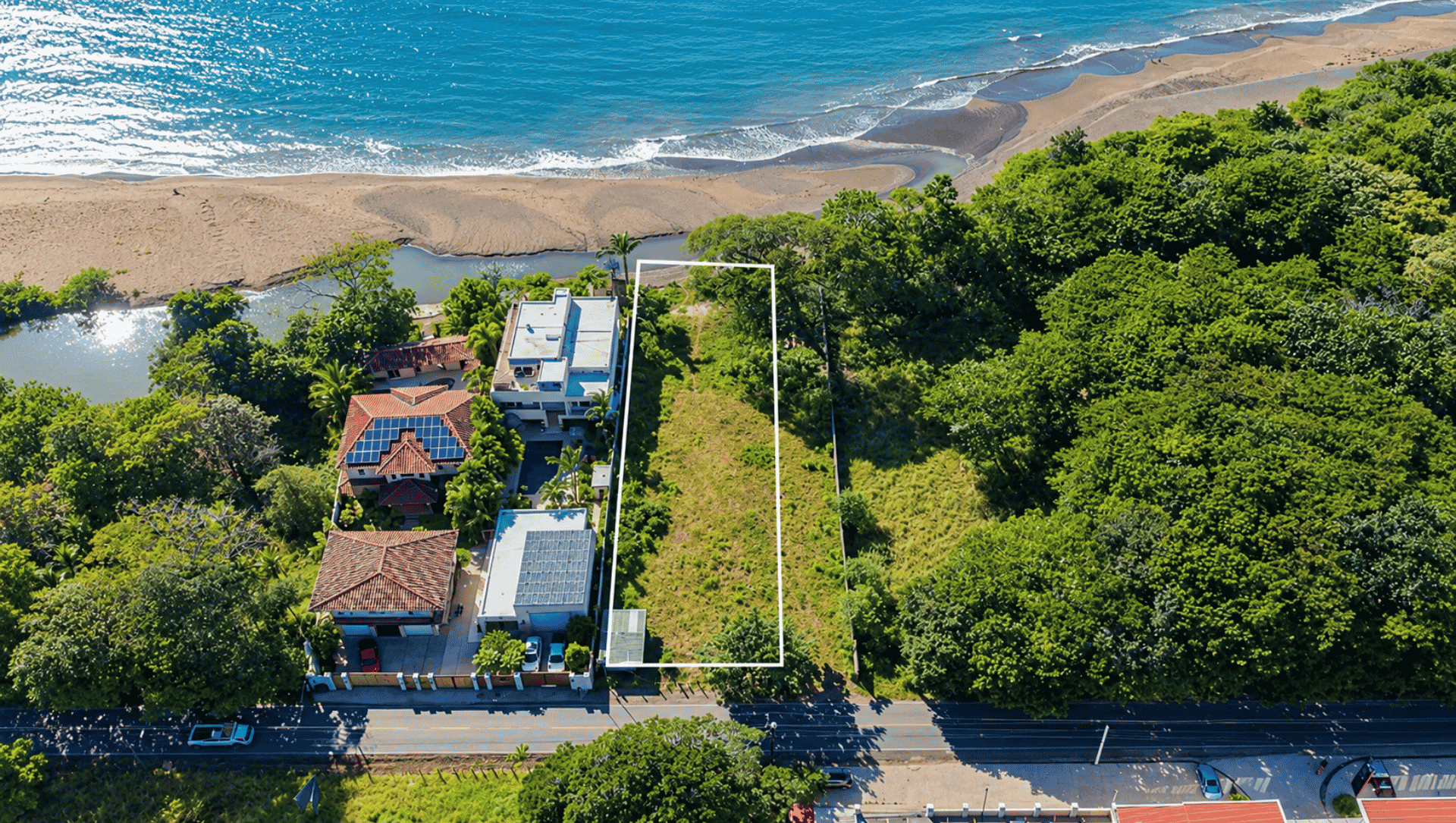
- Costa Rica offers residential lots, beachfront and ocean-view parcels, farms, commercial sites, and large development properties.
- Foreign buyers can generally own titled property with the same ownership rights as Costa Rican citizens, and residency is not required.
- Coastal land requires special attention because property within the Maritime Zone may be public land or concession property rather than conventional titled real estate.
- Before buying, confirm title, cadastral boundaries, legal access, land use, water availability, utilities, environmental restrictions, and construction feasibility.
- The purchase price is only part of the budget. Site preparation, roads, drainage, retaining walls, utilities, permits, and professional fees can significantly affect the total project cost.
Buying land in Costa Rica can open the door to a custom home, vacation property, agricultural project, rental development, or long-term investment. The challenge is that two parcels with similar sizes and prices can offer very different possibilities once access, water, zoning, terrain, and ownership structure are considered.
A flat residential lot near services may be easier to build on than a larger hillside property with ocean views. A coastal parcel may be fully titled, located within the Maritime Zone, or affected by environmental restrictions. Rural acreage may provide privacy and natural beauty, but buyers still need to confirm legal access, utilities, and the practical cost of development.
This guide explains what international and local buyers should examine when comparing Costa Rica land for sale. You can also review current opportunities through Coldwell Banker Costa Rica’s live land listings.
Why Buyers Look for Land in Costa Rica
Land appeals to buyers who want more control over location, design, and future use than an existing home may provide. Instead of adapting to another owner’s floor plan, buyers can select a parcel and create a residence suited to the climate, views, family needs, and intended lifestyle.
Costa Rica also offers considerable geographic variety within a relatively compact country. Buyers can consider dry tropical areas in Guanacaste, cooler mountain communities in the Central Valley, rainforest settings in the Southern Zone, agricultural regions in the interior, and established beach towns on both coasts.
Some buyers plan to build immediately. Others purchase land as a long-term holding while they prepare architectural plans, establish residency, or wait for the right time to relocate. Investors may look for parcels with subdivision potential, road frontage, commercial land use, or proximity to growing tourism markets.
The right land is therefore not simply the parcel with the best view or lowest price per square meter. It is the property whose legal status, infrastructure, and permitted use support the buyer’s actual goal.
Types of Land for Sale in Costa Rica
| Land Type | Typical Buyer | Main Points to Check |
|---|---|---|
| Residential building lot | Homeowners and retirees | Water, electricity, road access, setbacks, slope, and residential land use |
| Gated community homesite | Buyers seeking amenities and managed surroundings | HOA fees, design rules, construction deadlines, and community infrastructure |
| Beach-area or ocean-view parcel | Lifestyle buyers and vacation-rental investors | Title or concession status, water, slope, salt exposure, access, and view protection |
| Farm or agricultural acreage | Farmers, conservation buyers, and private-estate owners | Water sources, soil, topography, existing use, access, and environmental limitations |
| Commercial land | Business owners and developers | Commercial land use, traffic, frontage, parking, utilities, and permit requirements |
| Development parcel | Builders and professional investors | Density, subdivision rules, infrastructure capacity, environmental studies, and market demand |
Where to Buy Land in Costa Rica
Location should follow the intended use of the property. A parcel for a full-time residence needs a different set of services than land intended for agriculture, hospitality, or future appreciation.
Guanacaste and the Nicoya Peninsula
Guanacaste attracts buyers seeking beach access, warm weather, tourism activity, and proximity to Daniel Oduber Quirós International Airport in Liberia. Areas around Playas del Coco, Playa Hermosa, Playa Flamingo, Tamarindo, Sámara, Nosara, and the Gulf of Papagayo include residential homesites, ocean-view land, commercial parcels, and large development opportunities.
Buyers considering the northern Guanacaste coast can use this 2026 guide to living, buying, and investing in Playa del Coco to understand the community’s lifestyle, infrastructure, and real estate market.
Water availability deserves particular attention in this drier region. Buyers should confirm the specific source and documentation for a parcel instead of assuming that nearby development guarantees a connection.
Central Valley
The Central Valley appeals to buyers who prioritize hospitals, schools, professional services, cooler elevations, and access to San José. Land around Escazú, Santa Ana, Atenas, Grecia, Heredia, and other established communities can suit primary residences, gated developments, and commercial projects.
The brokerage’s guide to living in Escazú Village explains the area’s residential character, conveniences, schools, and property options.
Buyers who prefer a greener, cooler, and more rural setting within reach of the capital may also compare property, climate, and daily life in Rancho Redondo.
Because urban and suburban land may have more nearby infrastructure, buyers sometimes expect development to be straightforward. Municipal land-use rules, road frontage, drainage, and permitted density still need to be checked for the individual parcel.
Southern Pacific Zone
Dominical, Uvita, Ojochal, and surrounding areas are known for rainforest, mountain, and ocean-view settings. Buyers can find private homesites, conservation properties, farms, and hospitality-oriented land.
Steep terrain is common in some locations. A topographic study, soil evaluation, and realistic estimate for access roads, drainage, foundations, and retaining structures can be especially important.
Central Pacific
Jacó, Herradura, Quepos, Manuel Antonio, and nearby communities combine coastal living with established tourism markets. Land may be suitable for residences, rentals, commercial activity, or larger development, depending on its location and approved use.
Caribbean and Interior Regions
The Caribbean coast and inland agricultural areas may provide larger parcels, tropical settings, and different price points. Buyers should evaluate rainfall, flooding, road conditions, access to services, and the operating requirements of any agricultural or tourism plan.
Current Listings Show the Range of the Market
Coldwell Banker Coast to Coast Properties currently displays more than 1,400 land listings across Costa Rica. The inventory ranges from compact building lots to beachfront parcels, farms, and major development tracts.
Listing counts, prices, and availability can change, but the following examples illustrate how widely opportunities can vary.
Residential or Commercial Potential in Sardinal
Property ID 27043 in Sardinal, Guanacaste is advertised at $170,000.
The 2,476-square-meter, or approximately 0.61-acre, parcel is described as having flat topography, public road frontage, water availability, and potential for residential or commercial use. Its location offers access to Playas del Coco, the Gulf of Papagayo, and Liberia’s international airport.
A Flexible Parcel Near Sámara
Property ID 26610 in the San Fernando area of Sámara is advertised at $75,000.
The listing describes approximately 2,502 square meters, or 0.62 acres, with water and electricity available, a recent topographic plan, and documentation for residential and commercial use.
Titled Beachfront Land in Playa Potrero
Property ID 25493 in Playa Potrero is advertised at $1.5 million.
At approximately 2.05 acres, it represents the higher end of the coastal land market and demonstrates why buyers must distinguish between titled beachfront property and concession land.
These examples are not direct substitutes for one another. Their values depend on location, permitted use, infrastructure, ownership status, and development potential, not size alone. Always confirm current status and property details before making a financial decision.
Can Foreigners Buy Land in Costa Rica?
Foreigners can generally buy and own titled property in Costa Rica with the same rights as Costa Rican citizens. Legal residency is not normally required, and property may be purchased personally or through a Costa Rican corporation, depending on the buyer’s legal, estate-planning, and tax circumstances.
That general rule should not be applied blindly to every coastal parcel. Land within the Maritime Zone is governed differently, and some concession rights are subject to restrictions and approval requirements.
Buyers considering beachfront or near-beach property should use an independent Costa Rican attorney who understands the property’s exact legal status.
Titled Property Versus Maritime Zone Concession
Most property outside specially regulated areas is held through registered title. Ownership information, liens, annotations, and the registered survey can be reviewed through Costa Rica’s National Registry as part of due diligence.
For a closer look at this process, see Coldwell Banker Coast to Coast Properties’ guide to verifying property titles through the Registro Propiedad.
Along much of the coastline, the Maritime Zone generally extends 200 meters inland from the ordinary high-tide line. The first 50 meters are public land. The next 150 meters may be administered through a municipal concession rather than conventional fee-simple title.
A concession is not the same as titled ownership. Its validity, term, approved use, fees, transferability, and development conditions must be reviewed carefully.
There are also exceptions and titled beachfront properties in some locations, which is why buyers should never classify a coastal parcel based only on a map or marketing description.
Before signing an offer, have qualified legal counsel determine whether the parcel is titled, concession property, or affected by another special regime.
What to Check Before Buying Land
1. Title and Ownership
Your attorney should verify the registered owner, property number, liens, mortgages, easements, annotations, and any restrictions affecting transfer or use. The seller’s identity and authority to sell must match the legal record.
2. Survey and Boundaries
Review the registered cadastral survey and compare it with the land on the ground. A licensed surveyor can help confirm boundaries, area, access, and possible encroachments.
Fences, driveways, and informal occupation do not necessarily prove the legal boundary.
3. Legal Access
A parcel needs legally recognized access, not merely a path that neighbors have allowed people to use. Confirm that access appears correctly in the title, survey, and relevant municipal records.
Also consider whether the road is practical for construction vehicles and year-round use.
4. Land Use and Zoning
Ask the applicable municipality for current land-use documentation. Confirm whether the proposed residence, rental project, subdivision, hotel, business, or agricultural operation is permitted.
Do not assume that nearby construction means the same use will be approved on the parcel you are considering.
5. Water Availability
Water is one of the most important development questions in Costa Rica. Depending on the location, service may come from a municipal provider, the national water utility, a local ASADA, a legally registered well, or another approved source.
Obtain written confirmation appropriate to the intended project before treating the land as buildable.
6. Electricity, Internet, and Other Utilities
Check the nearest connection point and obtain estimates when extensions are required. A utility line visible from the property does not guarantee capacity or an inexpensive connection.
Remote buyers should also confirm the exact internet options rather than relying on general coverage for the area.
7. Topography, Soil, and Drainage
Views can come with higher construction costs. A topographic survey and soil or geotechnical evaluation can reveal constraints that are not obvious during a short visit.
Review drainage, erosion, landslide risk, flood exposure, and the amount of grading or retaining work that may be required.
8. Environmental Restrictions
Wetlands, waterways, forests, protected areas, and other environmental features can limit where and how a property may be developed.
Large trees, river setbacks, and apparent unused space should not automatically be treated as buildable area.
9. HOA and Development Rules
For land in a gated community or condominium regime, review architectural guidelines, homeowner association fees, construction timelines, minimum building sizes, rental rules, and shared infrastructure obligations.
These controls may protect community standards but can also limit design freedom.
10. Taxes and Municipal Obligations
Confirm that property taxes, municipal charges, concession fees where applicable, and other obligations are current.
Your attorney and accountant can explain ongoing costs and whether a corporate ownership structure creates additional filing or tax responsibilities.
Understanding the True Cost of Building
The land price is only the starting point. A lower-priced parcel can become more expensive than a prepared homesite if it requires major infrastructure or engineering work.
Potential costs include:
- Architectural, engineering, surveying, and legal services
- Soil studies, topographic plans, and environmental reviews
- Municipal and construction permits
- Site clearing, grading, and excavation
- Retaining walls, drainage systems, and erosion control
- Road or driveway construction
- Water storage, pumps, treatment, or connection work
- Electricity and internet extensions
- Septic systems or wastewater solutions
- Landscaping, gates, fencing, and security
Before comparing parcels, develop a preliminary project budget with local professionals.
The most useful question is not simply, “What does the land cost?” It is, “What will it cost to complete the property I want on this specific site?”
The Costa Rica Land Buying Process
- Define the project. Decide whether the goal is a home, rental, farm, commercial property, subdivision, or long-term land holding.
- Set a total budget. Include the purchase, closing costs, professional studies, infrastructure, permits, and construction.
- Compare suitable regions. Consider climate, airport access, healthcare, schools, tourism, services, and the amount of driving required.
- Inspect shortlisted parcels. Visit in person when possible, preferably under different weather and traffic conditions.
- Make a written offer. Use appropriate contingencies for legal review, water, permitted use, survey, financing, and technical feasibility.
- Complete due diligence. Your independent attorney and technical professionals should verify the legal and physical condition of the property.
- Close and register the transfer. A Costa Rican notary handles the transfer deed and registration process.
- Begin design and permitting. Purchasing the property does not authorize construction. The project must proceed through the applicable professional and government approvals.
Coldwell Banker Coast to Coast Properties provides additional explanations in its guide to buying property in Costa Rica and overview of the Costa Rica property buying process.
Common Mistakes Land Buyers Should Avoid
- Buying for the view before confirming whether the desired project can be built
- Assuming water or electricity is available because neighboring properties have service
- Confusing physical access with registered legal access
- Relying on the seller’s survey without comparing it with current conditions
- Underestimating slope, drainage, road, and retaining-wall costs
- Assuming all beachfront property is titled
- Signing a contract without adequate due-diligence contingencies
- Using the seller’s representatives as a substitute for independent legal advice
- Evaluating a parcel only during the dry season
- Buying more acreage than the budget can realistically maintain or develop
Questions to Ask About Any Costa Rica Lot
- Is the property titled, concession land, or held under another legal structure?
- Does the registered survey match the title and physical boundaries?
- Is there legally registered access from a public road?
- What land use is currently permitted?
- Is water legally available, and can the intended project obtain service?
- Where are the electricity and internet connection points?
- Has a topographic or soil study been completed?
- Are there waterways, wetlands, protected forests, or required setbacks?
- Does the land flood or become difficult to access during the rainy season?
- Are there HOA rules, easements, liens, or construction deadlines?
- What infrastructure work is needed before construction can begin?
- Which documents and approvals should be conditions of the purchase?
Frequently Asked Questions About Costa Rica Land for Sale
Can a US or Canadian citizen buy land in Costa Rica?
Yes. Foreigners can generally purchase titled property without becoming legal residents. Coastal concession property is different and requires specialized legal review because additional restrictions may apply.
Is land in Costa Rica a good investment?
It can be, but performance depends on location, legal status, infrastructure, permitted use, purchase price, and future demand.
Land does not automatically generate income, and undeveloped property may require ongoing maintenance, taxes, and security.
How do I know whether a lot is buildable?
Confirm title, legal access, municipal land use, water availability, environmental restrictions, setbacks, terrain, and soil conditions.
No single document answers every construction question, so legal, municipal, and technical checks should be coordinated.
Can I buy beachfront land in Costa Rica?
Yes, but beachfront opportunities require careful classification. Some parcels are titled, while others fall within the Maritime Zone and may involve concession rights.
Your attorney should verify the exact status before you sign an agreement.
Do I need water approval before buying?
Water availability should be treated as a central due-diligence issue whenever development is planned.
Obtain documentation appropriate to the provider, municipality, and intended project rather than relying on verbal assurances.
Should I buy land through a Costa Rican corporation?
Some buyers use a corporation, while others hold property personally.
The best structure depends on liability, tax, estate-planning, reporting, and concession considerations. Seek independent legal and tax advice before deciding.
Is financing available for land purchases?
Financing may be more limited than in some buyers’ home countries, particularly for undeveloped land and nonresidents.
Cash purchases and private or seller financing are common in some market segments, but terms vary widely.
Should I visit during the rainy season?
If possible, yes. Rain can reveal drainage, erosion, road-access, and flooding conditions that may not be visible during the dry season.
When a rainy-season visit is not possible, request professional inspections and local information about year-round conditions.
How to Shortlist the Right Parcel
Start with your nonnegotiable requirements rather than browsing only by price. Set the desired region, total project budget, minimum usable area, access standard, preferred climate, distance from services, and intended use.
Then divide possible properties into three groups:
- Ready for near-term development: Documented water, practical access, compatible land use, and manageable terrain
- Promising with further investigation: Attractive location or value, but one or more important items still require confirmation
- Long-term or speculative: Property purchased primarily for future potential, with no assumption that immediate development is possible
This approach helps buyers avoid comparing a prepared building lot with raw acreage as if they were equivalent products.
The cheapest land is not always the lowest-cost route to a finished home or profitable project.
Finding Land That Fits the Plan
Costa Rica offers land for many goals, from a private tropical homesite to a commercial project or large agricultural holding. The strongest purchase is one that works legally, physically, and financially, not simply one that looks attractive in a listing.
Choose the region according to how you plan to live or invest. Verify title and access. Confirm water and permitted use in writing. Understand the terrain and environmental conditions. Most importantly, calculate the cost of completing your intended project before deciding what the land is worth to you.
With experienced local guidance and independent professional due diligence, buyers can move beyond the view and evaluate each parcel as a complete development opportunity.
Editorial note: Listing prices, counts, and availability were checked in September 2026 and may change. This article provides general information and is not legal, tax, engineering, or investment advice.