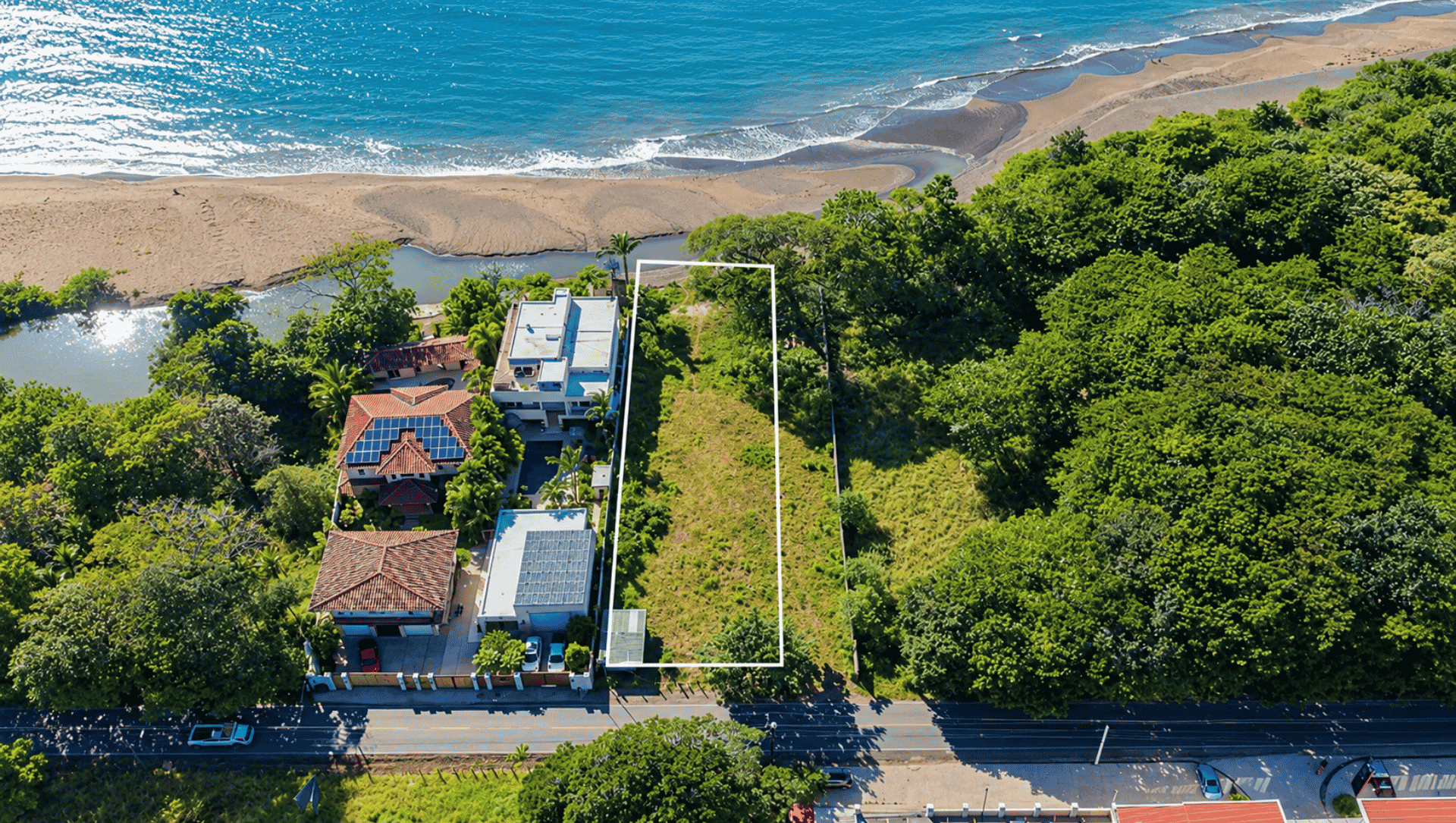
Quick Summary
- Sardinal: A 2,476 square meter parcel listed at $170,000 with flat topography, public road frontage, water availability, and residential or commercial potential.
- San Fernando near Sámara: A 2,502 square meter parcel listed at $75,000 with water, electricity, a recent topographic plan, and documentation for residential and commercial use.
- Playa Potrero: Approximately 2.05 acres of titled beachfront land listed at $1.5 million.
- All three properties are represented by Coldwell Banker Coast to Coast Properties agent Amer Musharbash.
- Buyers should confirm title, cadastral boundaries, legal access, land use, water, utilities, terrain, environmental limits, and construction feasibility before closing.
You may find two Costa Rica land listings at a similar price, yet one could be ready for a home while the other needs major work before construction can begin. Water access, legal road access, permitted use, terrain, ownership structure, and utility connections can change both the practical value of a parcel and the true cost of developing it.
Coldwell Banker Coast to Coast Properties helps buyers compare these details before they commit. The current portfolio includes residential lots, mixed use parcels, farms, commercial sites, and beachfront land across Costa Rica. Start with the three active examples below, then use this guide to decide which questions matter most for your plans.
Browse all current Costa Rica land for sale or contact the Coldwell Banker Costa Rica team to request a focused property search.

Three Current Costa Rica Land Listings to Compare
These properties show why price per square meter is not enough. Each parcel serves a different buyer goal, and each requires a different due diligence strategy.
1. Sardinal Lot With Residential or Commercial Potential
Asking price: $170,000
Property ID: 27043
Lot size: 2,476 square meters, approximately 0.61 acres
Agent: Amer Musharbash
This Sardinal parcel offers flat topography, public road frontage, and advertised water availability. The listing describes potential for either residential or commercial development. Its location provides access to schools, supermarkets, restaurants, Playas del Coco, the Gulf of Papagayo, and Liberia International Airport.
A buyer could consider this lot for a private home, a business location, or an investment project, subject to legal and municipal confirmation. The adjacent Lot 38 may also be available, which could create a larger development site.
View Property ID 27043 and inquire about a Sardinal viewing
2. Flexible Land Near Sámara and Nicoya
Asking price: $75,000
Property ID: 26610
Lot size: 2,502 square meters, approximately 0.62 acres
Agent: Amer Musharbash
Located in San Fernando near Sámara, this parcel is positioned for buyers who want access to Sámara, Nicoya, and nearby beaches while retaining a more natural setting. The listing states that water and electricity are available. It also notes a recent topographic plan and land use documentation for residential and commercial purposes.
That combination may suit a private residence, vacation rental concept, small commercial project, or mixed use plan. Buyers should still have their attorney and technical advisers confirm every document and verify that the intended project qualifies for approval.
View Property ID 26610 and request a private showing
3. Titled Beachfront Land in Playa Potrero
Asking price: $1.5 million
Property ID: 25493
Lot size: Approximately 2.05 acres
Agent: Amer Musharbash
This Playa Potrero parcel represents a very different part of the Costa Rica land market. The listing presents it as titled beachfront property, a detail that deserves careful attention because many coastal properties are governed through Maritime Zone concessions instead of conventional title.
A buyer considering this property should have independent legal counsel verify the registered title, survey, access, permitted use, environmental conditions, and any coastal restrictions. The parcel may appeal to a buyer seeking a significant private estate or coastal development opportunity, subject to all required approvals.
View Property ID 25493 and ask about the title documentation
Prices, status, and availability can change. Review each live listing and confirm current information directly with the brokerage before making a decision.
Which Property Type Fits Your Goal?
| Buyer Goal | Property Type to Consider | Priority Checks |
|---|---|---|
| Build a primary home | Residential lot near daily services | Water, electricity, road access, land use, slope, soil, and buildable area |
| Create a rental property | Lot near an established tourism market | Rental rules, permitted density, parking, wastewater, access, and management needs |
| Open a business | Commercial or mixed use parcel | Commercial land use, road frontage, traffic, signage, parking, water, and utilities |
| Own beachfront land | Titled beachfront property or a verified concession | Exact legal structure, survey, coastal restrictions, concession terms, access, and environmental review |
| Hold land for future plans | Parcel in a location with clear long term demand | Title, access, carrying costs, maintenance, infrastructure plans, and realistic future use |
| Develop several units | Larger residential, commercial, or mixed use site | Density, subdivision rules, water capacity, wastewater, roads, studies, and market demand |
The best parcel is not always the largest lot or the lowest advertised price. It is the property whose legal status, usable area, infrastructure, and permitted use support the project you actually want to complete.

Where to Look for Land in Costa Rica
Guanacaste and the Nicoya Peninsula
Guanacaste attracts buyers who value warm weather, beaches, tourism activity, and access to Liberia International Airport. Playas del Coco, Playa Hermosa, Playa Flamingo, Tamarindo, Sámara, Nosara, Sardinal, Potrero, and the Gulf of Papagayo offer a broad mix of homesites, commercial parcels, ocean view lots, and larger development opportunities.
Water is a central question in this region. Ask who supplies it, what documentation is available, whether the service has capacity for your intended project, and whether any connection work remains. Never treat nearby utility lines or neighboring construction as proof that a parcel is ready for your plans.
For more context about the northern coast, read the 2026 guide to living, buying, and investing in Playa del Coco.
Central Valley
The Central Valley may suit buyers who prioritize hospitals, schools, professional services, cooler elevations, and access to San José. Escazú, Santa Ana, Atenas, Grecia, Heredia, and nearby communities include residential lots, gated projects, and commercial land.
Existing infrastructure can make these areas look simple to develop, but every parcel still needs an individual review. Municipal land use, legal frontage, drainage, density, setbacks, and utility capacity can determine what is possible.
Compare local lifestyles through the brokerage guides to living in Escazú Village and property and daily life in Rancho Redondo.
Southern and Central Pacific
Dominical, Uvita, Ojochal, Jacó, Herradura, Quepos, and Manuel Antonio combine dramatic scenery with established tourism markets. Buyers can find private homesites, rainforest land, ocean view parcels, farms, and hospitality opportunities.
Terrain can create impressive views, but it can also add costs for roads, drainage, grading, foundations, and retaining structures. A topographic study and a soil evaluation can help a buyer estimate whether the project remains practical after the land purchase.
Caribbean Coast and Interior Regions
The Caribbean coast and inland agricultural regions may offer larger properties and different price points. Review rainfall, flood exposure, road conditions, travel times, access to services, soil, water sources, and the operating requirements of any farm or tourism concept.
Can Foreigners Buy Land in Costa Rica?
Foreign buyers can generally purchase titled property in Costa Rica without legal residency. A property may be held personally or through a Costa Rican corporation, depending on the buyer's legal, tax, liability, and estate planning needs.
That general principle should not be applied to every coastal property. Some land near the shoreline is governed by the Maritime Zone system. A buyer must know whether a parcel has conventional registered title, municipal concession rights, or another legal status.
Coldwell Banker Coast to Coast Properties provides an overview of how property titles are verified through the Registro Propiedad. Buyers should also retain an independent Costa Rican attorney to examine the exact property and transaction.

Titled Property and Maritime Zone Concessions
Most property outside specially regulated areas is held through registered title. During due diligence, the buyer's attorney can review the registered owner, property number, survey, liens, mortgages, easements, annotations, and restrictions.
Along much of the coast, the Maritime Zone generally reaches 200 meters inland from the ordinary high tide line. The first 50 meters are public land. The next 150 meters may be administered through a municipal concession.
A concession is not the same as conventional title. Its term, approved use, fees, transfer rules, development conditions, and validity require careful review. Some coastal properties are titled due to specific legal circumstances, which is why buyers should never classify land only from a map, an advertisement, or its distance from the water.
Before signing an offer, ask qualified legal counsel to determine the exact ownership structure and confirm whether the planned use is permitted.
Ten Checks to Complete Before Buying Land
1. Confirm the Registered Owner and Title
Your attorney should verify the owner, property number, liens, mortgages, easements, annotations, and any restriction that could affect transfer or use. The seller's identity and authority to sell must agree with the legal record.
2. Compare the Survey With the Physical Parcel
Review the registered cadastral survey and compare it with the land on site. A licensed surveyor can help confirm boundaries, area, access, and possible encroachments. Fences, paths, gardens, and driveways do not necessarily establish the legal boundary.
3. Verify Legal and Practical Access
A visible path is not always registered legal access. Confirm access in the title, survey, and relevant municipal records. Then decide whether the route is practical for daily vehicles, construction equipment, deliveries, and rainy season conditions.
4. Obtain Current Land Use Documentation
Ask the relevant municipality whether the proposed home, rental project, subdivision, hotel, shop, office, or agricultural use is permitted. Nearby buildings do not prove that your parcel qualifies for the same use or density.
5. Document Water Availability
Identify the provider and obtain the documentation needed for the intended project. Service may come from the national utility, a municipality, a local ASADA, a registered well, or another approved source. An advertisement stating that water is available should be verified during due diligence.
6. Price Utility Connections
Confirm where electricity and internet connections are located and whether the providers can serve the project. A line near the property does not guarantee capacity or a low connection cost.
7. Study Topography, Soil, and Drainage
Ask technical professionals to evaluate slope, soil, drainage, erosion, landslide exposure, flooding, grading, foundations, and retaining needs. These findings can materially change the construction budget.
8. Review Environmental Limits
Wetlands, waterways, forest, protected areas, and required setbacks can reduce the usable part of a parcel. Treat buildable area as a technical and legal finding, not as the amount of open land visible during a visit.
9. Read Community Rules
If the property belongs to a gated community or condominium regime, review fees, design standards, minimum building sizes, construction schedules, rental rules, and shared infrastructure obligations.
10. Confirm Taxes and Other Obligations
Check property taxes, municipal charges, association balances, and concession fees where applicable. Ask legal and accounting advisers whether the chosen ownership structure creates additional filing or tax duties.
Calculate the Full Development Cost
The asking price is only one part of the project budget. A lower priced lot can cost more to complete if it needs substantial access, drainage, utility, earthwork, or engineering improvements.
Include realistic allowances for:
- Legal review, surveying, architecture, and engineering
- Topographic work, soil studies, and environmental review
- Municipal approvals and construction permits
- Clearing, grading, excavation, and erosion control
- Drainage, retaining structures, foundations, and access roads
- Water connections, storage, pumps, and treatment
- Electricity and internet extensions
- Septic or other wastewater systems
- Landscaping, fencing, gates, security, and maintenance
The essential question is not only, “What does the land cost?” Ask, “What will it cost to complete the property I want on this exact site?”

A Practical Buying Process
- Define the goal. Decide whether you want a home, rental, farm, commercial property, development site, or long term holding.
- Set the complete budget. Include the purchase, closing, studies, infrastructure, permits, construction, and a contingency.
- Select suitable regions. Compare climate, services, airports, healthcare, schools, tourism demand, and travel time.
- Ask the brokerage for a focused shortlist. Share the intended use, budget, preferred area, minimum usable space, and timing.
- Visit the strongest options. Walk the boundaries and access route. If possible, evaluate conditions during wet weather.
- Make a written offer with appropriate conditions. Conditions may address legal review, water, land use, survey, financing, and technical feasibility.
- Complete independent due diligence. Coordinate the attorney, surveyor, architect, engineer, and other specialists required for the parcel.
- Close and register the transfer. A Costa Rican notary manages the transfer deed and registration process.
- Begin design and permitting. Ownership alone does not authorize construction. The project must receive all applicable approvals.
Review the brokerage's guide to buying property in Costa Rica and its explanation of the Costa Rica property buying process.
Questions to Ask About a Costa Rica Lot
- Is the parcel titled, concession land, or held through another legal structure?
- Does the registered survey agree with the title and physical boundaries?
- Is legal access properly registered?
- What uses and density are currently permitted?
- Which provider supplies water, and what written proof is available?
- Where are the electricity and internet connection points?
- Has a recent topographic plan or soil study been completed?
- Are there waterways, wetlands, forest, setbacks, or protected areas?
- What happens to access and drainage during the rainy season?
- Are there fees, easements, liens, design rules, or construction deadlines?
- What infrastructure must be completed before building can begin?
- Which findings should be written conditions of the purchase agreement?
Frequently Asked Questions
Can a United States or Canadian citizen buy land in Costa Rica?
Foreigners can generally purchase titled property without becoming legal residents. Coastal concession property is different and may involve additional restrictions, municipal approvals, and specialized legal review.
How can I tell whether a lot is buildable?
Confirm title, legal access, land use, water, utilities, environmental limits, setbacks, topography, drainage, and soil conditions. No single document answers every construction question, so the legal, municipal, and technical reviews must work together.
Can I buy beachfront land?
Yes, but the exact legal structure matters. Some parcels have registered title while others fall within the Maritime Zone concession system. Have an independent attorney verify the status before signing an agreement.
Should I visit during the rainy season?
If possible, yes. Rain may reveal drainage, erosion, flooding, and road conditions that are less visible during the dry season. If a wet season visit is not practical, request professional evaluations and reliable local information.
Is financing available for land?
Financing may be more limited for undeveloped land and buyers who are not residents. Cash purchases, private financing, and seller financing appear in some market segments, but terms vary by property and transaction.
Should I use a Costa Rican corporation?
Some buyers hold property personally, while others use a corporation. The suitable structure depends on tax, liability, reporting, estate planning, and any concession considerations. Obtain independent legal and tax advice before choosing.
Choose the Parcel That Works Beyond the Listing
Costa Rica offers land for a private tropical home, a rental project, a business, a farm, or a major coastal investment. The strongest purchase is the parcel that works legally, physically, and financially after every important detail is checked.
Use the live listings to compare real opportunities. Ask the brokerage for property specific documents and viewing information. Then rely on independent legal and technical professionals to verify title, access, water, permitted use, terrain, and costs before you commit.